Choosing a new hair color can feel exciting—until you wonder whether the shade will suit your face, wardrobe, and everyday routine. This guide explains how to visualize a new hair color before making a lasting change. It focuses on practical options for readers in China, from virtual try-on tools to useful questions for a salon consultation. A phone screen can offer a helpful preview, but it cannot reproduce every detail of real hair.
Lighting matters. So does your starting color. A cool brown may look almost black in a dim room, while warm indoor lights can make a copper tone appear stronger than it is. For a more useful comparison, take a clear photo in natural daylight and test several shades against the same image. Check how each option looks with your usual makeup and clothing, too. Small details count.
This article will outline ways to compare colors, assess app previews, and prepare reference images for a stylist. It will also explain why a digital result is only an estimate: hair texture, previous color treatments, and salon techniques can change the outcome. A qualified colorist can assess your hair in person and discuss what is realistic. I still find virtual previews a little imperfect, especially for subtle highlights. That is worth remembering. Use them to narrow your choices, not to promise an exact result.
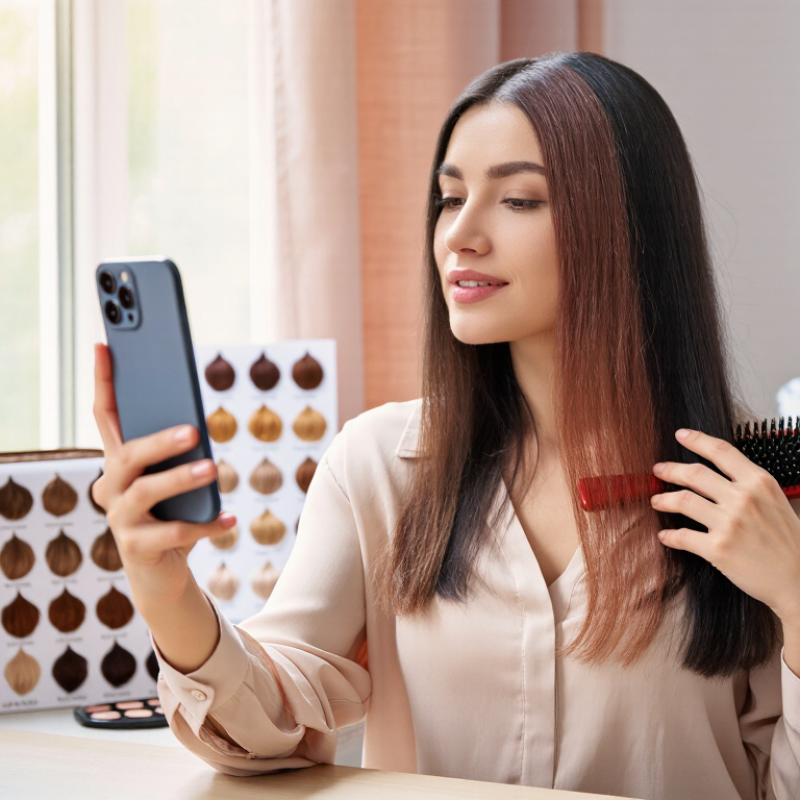
Before choosing a new shade, record your starting point in daylight. Note the root color, lighter or darker lengths, visible gray, and any previous dye or lightening. These details matter because one head of hair can hold several different color histories. Take a front and side photo beside a white sheet of paper; indoor bulbs can shift brown toward red or yellow. Light matters. In a consultation, a stylist can compare the photo with a strand test, which shows how your own hair responds. I may still misread a screen preview, so treat it as a guide, not a promise.
Then describe the change in practical terms: “two levels lighter,” “less red,” or “cooler brown,” rather than only naming a trend shade. Grand View Research estimated the global hair-color market at USD 23.66 billion in 2023, reflecting wide demand and many shade options. That market figure cannot predict your result, though. Hair condition, porosity, and earlier color affect the outcome. If your ends feel rough or look much darker than your roots, note that before planning a big shift. It can feel overly cautious. Still, a small test section may reveal an unwanted warmth that a polished preview misses.
Choosing a hair color starts with your skin’s undertone, not a trend photo. In daylight, look at your skin beside a white shirt; warm, cool, or neutral clues may become easier to notice. Warm undertones often pair well with golden brown, copper, or honey shades. Cool undertones may suit ash brown, soft burgundy, or beige blonde. Neutral skin can usually explore both. These are guides, not rules.
Your natural hair matters just as much. Dark, coarse hair may need more than one gentle lightening step to show a pale shade, while fine or previously colored hair can react unevenly. Check its condition and color history before choosing a dramatic change. Texture also shifts the result: curls create shadows, and straight hair reflects light more evenly. Light changes everything. A phone preview can help compare options, but screen settings and indoor lighting distort color. Try a temporary face-framing piece or a small strand test first. It may look less exciting than a full-color mockup, but it gives more useful evidence. Reconsider the shade after seeing it in daylight and against your usual clothing.
| Skin tone and undertone | Shades to preview | Starting hair and hair type | What to expect | How to visualize it |
|---|---|---|---|---|
| Fair to light; cool undertone Skin tends to look pink, rosy, or bluish. |
Ash brown, cool dark brown, beige blonde, or soft burgundy. | On naturally dark hair, lighter beige or blonde shades usually require lightening. Fine hair may show color changes more quickly. | Cool shades can create a softer contrast. Very light shades may need more than one salon session when the starting hair is dark. | Compare cool brown and beige tones in daylight photos; check that the preview does not alter skin tone or lighting. |
| Fair to light; warm undertone Skin tends to look peach, golden, or yellow. |
Honey brown, warm chestnut, caramel, or copper. | On straight hair, highlights can look more defined; waves and curls can make dimension appear more blended. | Warm shades add golden or reddish reflections. Copper tones may fade noticeably and can require color-safe care. | Preview the shade beside a neutral daylight selfie and compare it with your natural eyebrow color. |
| Medium skin; neutral undertone Skin shows a mix of warm and cool cues. |
Chocolate brown, neutral brown, soft espresso, or muted auburn. | For thick or coarse hair, a strand test helps assess processing time and how evenly the color takes. | Mid-depth shades often keep a natural-looking result. The final appearance depends on your base color, previous dye, and porosity. | Try the same shade in both a full-color preview and a subtle highlights preview before choosing. |
| Medium to deep skin; warm or olive undertone | Dark chocolate, chestnut, cinnamon brown, or subtle caramel ribbons. | Dark virgin hair can show brown or red reflections more readily than a much lighter result without lightening. | A few lighter pieces can add dimension while keeping most of the natural depth. Results vary with the starting level. | Preview under daylight and indoor light; warm shades can look more vivid in sunlight. |
| Medium to deep skin; cool or neutral undertone | Cool espresso, blue-black, ash brown, or deep plum-brown. | Previously colored hair may not lighten evenly with another dye application; a colorist can assess the safest approach. | Deep shades usually preserve a high-contrast look. Blue-black can appear nearly black indoors and more reflective in bright light. | Use a photo with your hairline visible and compare the preview in neutral lighting, not only with a beauty filter. |
| Any skin tone; choosing a vivid color | Burgundy, copper, rose brown, or a small accent of a brighter fashion shade. | Damaged, highly porous, or previously lightened hair may absorb color unevenly and lose vividness faster. | Brighter colors may need pre-lightening and regular refreshes. A strand test and professional assessment are especially useful. | Preview a small face-framing section first, then consider a temporary color filter or clip-in extensions before committing. |
Quick guide: Hair color previews are estimates, not guarantees. Screen settings, lighting, natural hair level, previous color, and hair condition can all affect the result. Follow product instructions, perform the recommended allergy alert test, and use a strand test before coloring.
Choose a preview method based on the decision you need to make. A phone-based augmented reality tool is useful for comparing several shades quickly. It shows color on your face, but lighting, camera settings, and screen calibration can distort the result. A digital preview is a starting point, not a promise.
For a closer check, ask a trained colorist for a strand test. This reveals how dye may interact with your current color and hair condition. A swatch card offers a simple comparison, though printed samples cannot fully reproduce results on your hair. Grand View Research estimated the global hair color market at about US$25.9 billion in 2023, with projected growth through 2030. That industry estimate shows the category’s scale; it does not prove that any preview method is accurate. Real hair can still surprise you.
Tips: Compare previews in daylight and indoor light. Keep your face in the same position for each image. Save two or three options, then discuss them with a qualified colorist. If your hair is previously colored or porous, mention that detail. Small differences matter.
A photo preview can help you compare hair colors before making a change. Take a clear picture in daylight, with your hair dry and your face evenly lit. Avoid warm bathroom bulbs; they can make brown shades look coppery. Try front and side views. Small details matter.
Virtual try-on tools are useful, but treat the result as an estimate. A digital overlay may miss curls, flyaways, gray strands, or darker roots. Your current color and hair condition also affect the final shade. Screens can lie. Compare two or three nearby shades, not only dramatic changes, and check the preview against a color swatch. If you plan to show a stylist in China, save the image and note the shade name or color level when available. The picture gives you a starting point, not a guarantee. I would still question a perfect-looking preview; real hair reflects light unevenly, and that can change how a color appears.
Before choosing a new hair color in China, compare visual previews under daylight, indoor lighting, and a phone camera. Dark hair can hide cool beige or ash tones, while warm indoor light may exaggerate copper. Digital previews are useful, but imperfect. They cannot fully predict porosity, previous dye, or uneven bleaching.
Use a reference photo with similar hair length and texture. Compare three versions: fresh color, four-week regrowth, and faded mid-lengths. The American Academy of Dermatology Association reports that scalp hair grows about half an inch monthly, so a dark root can become visible within three to five weeks. Plan maintenance around that timeline, not only around the first-day result. A 2023 professional beauty industry report also identifies repeat services and client retention as major salon business measures, supporting regular color reviews rather than one-time decisions.
Record the formula, processing time, starting shade, and lighting conditions. Schedule a check after two weeks. This catches unwanted brassiness early, although my own comparison method is not flawless. Porous ends may fade faster than the roots, creating a dull band. Use a gentle wash routine, reduce very hot water, and discuss a gloss or root refresh with a qualified colorist. Patch testing remains sensible because the FDA notes that hair-dye reactions can occur even after previous successful use. Compare photos monthly, but trust the hair’s condition more than a perfect screen preview.
Check your roots, lengths, gray strands, and previous color in daylight. One head may contain several color histories.
White helps reveal the real tone. Warm indoor bulbs can make brown hair appear red or yellow.
Use practical terms, such as “two levels lighter,” “less red,” or “cooler brown.” Trend names can be unclear.
No. It is only an estimate. Screens, lighting, camera settings, curls, and uneven hair can change the appearance.
Take dry-hair photos in daylight, with even lighting. Keep your face in the same position and compare two or three nearby shades.
Porous or damaged hair may absorb color unevenly. Rough ends can look darker or warmer than the roots.
It shows how your own hair may respond. It can expose unwanted warmth that a polished digital preview misses.
They provide a useful comparison, but paper cannot fully reproduce color on real hair. Treat the swatch as a guide.
Mention previous dye, lightening, gray hair, porous areas, and uneven lengths. Small details can change the plan.
Daylight and indoor light reveal different tones. A shade may look cooler outside and warmer near a lamp. Real hair still surprises.
Learning how to visualize a new hair color begins with evaluating your current shade, hair condition, and the type of change you want. Consider whether you prefer a subtle adjustment or a dramatic transformation, then choose a color that complements your skin tone and works well with your hair’s texture and porosity. Understanding these factors can help you set realistic expectations and avoid choosing a shade that may require excessive processing.
Next, explore different ways to preview the result, such as taking well-lit photos, using simple digital editing tools, or trying virtual hair color features. Compare several shades from different angles and lighting conditions before making a decision. Once you understand how to visualize a new hair color, create a maintenance plan that includes touch-up timing, color-safe care, and regular conditioning. This approach makes the final choice more thoughtful, practical, and easier to maintain.
